Monday, April 25, 2011
KID has a new Blog!
As we mentioned in the last post, KID has moved our blog to be more integrated into our website -- you can find new posts here. This page will remain up for a while, but set your bookmarks for http://www.kidsindanger.org/blog/.


Friday, April 22, 2011
KID to launch new website!
 Late today, KID is switching over to a new website -- we've listened to what parents, caregivers, advocates and others want to see and made some amazing changes. We think you'll find the new KID website easier to use and navigate and a wealth of information to access while working to keep children safe.
Our blog too is moving to be better integrated into our web presence. But don't worry, all our older posts can still be found there including some of our most popular such as Back-to-School Safety and CPSC, FDA issue warning on sleep positioners.
So, next time you type in KidsInDanger.org, we hope you'll take a look around our new site and give us feedback in the blog comments. Many thanks to our designer Amy Cordell and site builder Seventhfury.
In the meantime, if the transfer hits a few bumps or snags, we'll have it fully operational by Monday. You can email us here if you run into problems.
Wednesday, April 13, 2011
CPSC database now has over 200 incidents posted; survived appropriation process

First, thanks to all of you who emailed or called Congress expressing your support for the new consumer incident database, SaferProducts.gov, at CPSC. If you haven't visited yet, check out the Search page and see what incidents consumers have already filed.
But during last weekend's debate on keeping the government open, discussion of eliminating funding for this important safety program continued. In the end, the final agreed bill did not include a defunding of the database. It did however contain a required study by the Government Accountability Office (GAO) to be conducted within 180 days.
The proposed study has to examine:
- whether the information that is submitted is from first-hand knowledge;
- whether the complaint information is adequate for CPSC investigative purposes;
- whether the product information is sufficient to enable consumers and stakeholders to identify the product; and
- whether the time allotment before posting complaints is reasonable for adjudication of claims.
However, with spending discussions continuing in Congress, additional action could still be taken. But having spent the money to conduct this study, any possible changes to the database should wait for any results.
Friday, April 8, 2011
Saferproducts.gov now has consumer reports posted

Saferproducts.gov, the new searchable database at the Consumer Product Safety Commission (CPSC) went live for reports on March 11. Now, as the three week timeline for processing the reports comes to an end, CPSC has begun posting those reports. KID, while not busy defending CPSIA in the House, has taken a look and recommends you do too.
The reports are varied. Some cover known hazards such as crib failures, fingertip amputation hazards in strollers, and the continuing reports of rashes from diapers. Others raise new potential issues: loosening hardware on cribs, breaking toys and rattles releasing small parts, and possible design problems in other products.
Also of interest is the manufacturer response. Some, use the comment space to indicate a real commitment to safety, while others reassert their compliance with voluntary standards or to even negate the parent's report.
One report, while including a catalog page with the exact product reported, included a business response that the information was insufficient to tell if it was their product. Huh?
So please, take a look for yourselves and let us know what you think about the database -- will it be a useful tool for researching product safety or identifying emerging hazards? It might be a little hard to tell with just a week's worth of reports, but we'd love to hear what you think. Leave a comment here or on our Twitter or Facebook pages.
House subcommittee grills safety advocates
At yesterday's hearing to begin the dismantling of the 2008 safety law which includes key provisions on juvenile product safety named for Danny Keysar, the House Subcommittee on Commerce, Manufacturing and Trade seemed unwilling to consider that their "wrecking ball" approach (as noted by Representative Waxman (CA-30)) might be unwise. Most of the questioning was reserved for the few safety advocates and its intent seemed more to score points than learn helpful information to construct a narrow approach to give flexibility rather than gut safety provisions. It appears that if we hope to keep safety laws intact, with minor adjustments to address concerns raised by handmade and very small toymakers, this might not be the committee to do that. However, Chairman Bono Mack did indicate a willingness to work with Congressman Jan Schakowsky (IL-9) on cribs and other juvenile product safety issues. We'll continue to hope!
Thursday, April 7, 2011
This morning, a House Committee looks at gutting CPSIA
This morning in Washington, DC, the House Subcommittee on Commerce, Manufacturing and Trade is holding a hearing on proposed changes to the landmark Consumer Product Safety Improvement Act of 2008. Hearing from three panels, mostly of industry representatives, the subcommittee will look at far reaching changes including changing the requirement that all children's products should be lead-free, eliminating independent testing for most children's products and allowing cribs that could be unsafe to remain in child care facilities.
We'll have an update after the hearing, but were reassured that at least the majority of the commissioners at CPSC still support strong safety measures. Read their analysis of the legislation here and Rachel Weintraub's testimony here. Rachel is with the Consumer Federation of America and a past KID's Best Friend honoree -- you can see why!
Wednesday, April 6, 2011
Arm's Reach Bed-Side Sleepers RECALLED

Yesterday, CPSC released the Arm's Reach Concepts, Inc's voluntary recall of about 76,000 infant bed-side sleepers, due to entrapment, suffocation and fall hazards.
Infants are at risk of falling from the raised mattress to the loose fabric at the bottom of the sleeper or possibly suffocating by becoming entrapped between the mattress and the sleeper. 10 reports have been filed with CPSC and Arm's Reach, citing infants falling or becoming entrapped.
The recall includes all bed-side sleepers manufactured between September 1997 and December 2001. Model number and manufacture date can be found on a sticker on one of the product's legs. The recall includes model numbers that begin with:
Originals: 8108, 8133, 8111, 8112 & 8199
Universal: 8311
CPSC suggests that consumers stop using the product immediately. Visit www.armsreach.com/instructions to download instructions to make sure your sleeper is assembled correctly before continuing use. Consumers can contact Arm's Reach at (800) 954-9353 or a www.armsreach.com.
Ten reports of potentially entrapped infants is troubling and just telling parents to read the instructions again doesn't seem much of a remedy. Be very careful using this product and discontinue use until you check your assembly for any potential gaps. Bedside sleepers can form dangerous gaps between the adult bed and the product if it isn't tightly installed, only on beds with a box spring and mattress configuration. Report any concerns with your bedside sleeper or other products to SaferProducts.gov.
Saturday, April 2, 2011
Proposal before House Committee will gut the Danny Keysar Act and leave children vulnerable

In 2008, parents of children injured or killed by unsafe juvenile products rejoiced when the Danny Keysar Child Product Safety Notification Act was included in the Consumer Product Safety Improvement Act and signed into law. This portion of the CPSIA assured parents that:
- For the first time, cribs, strollers, high chairs and other juvenile products had to be independently tested for safety before we brought them into our homes to use with our children.
- Strong new standards would be adopted for juvenile products that would assure that the required testing would find potential flaws and make sure the products were safe for use.
- Child care facilities and other public accommodations could only offer children safe cribs that met federal standards.
- Parents would be given the opportunity to register their products with the manufacturer either through a postage paid card or online – making sure they would learn of recalls.
Well, fill out those product registration cards – you’re going to need them! The new House Subcommittee on Commerce, Trade and Manufacturing wants to strip most of those protections – just like they stripped the words ‘Consumer Protection’ from their subcommittee name – it’s not like they didn’t warn us!
In addition to many other onerous changes that reduce the safety of all products you and your children use, here are the specific changes that affect infant and toddler durable products:
- Strips the requirement for independent testing from all infant and toddler products, except for testing cribs to the old standards that eliminated gaps between slats, but little else. But that stroller, high chair or carrier? Your child will again be the test dummy for safety. Companies may say they employ their own testing, but we saw where that got us with the 10 million cribs recalled in the last four years and dozens of deaths each year in nursery products.
- First, the proposed change says that child care providers have to replace their old cribs that don’t meet the standard – but just this once. In the future, if the standard changes, the facilities can keep using their cribs, only moving up to cribs that meet the new standard when they replace them. We understand this rule – after all, some centers will only be getting their new cribs in late 2012 when there might already be a few changes to the standard – making it a ridiculous exercise in trying to keep up. BUT, the next proposed change, combined with this commonsense change, will basically mean that your child care can keep on using any old crib they want – as long as it doesn’t have a drop-side. Read on…
- The next proposed change says that if a child care facility is using fixed sided cribs (no drop-sides), they don’t have to comply with the new law that requires all cribs in child care to meet the new standard by 2013. So if a center is using an old crib, that we know is unsafe – it has corner posts that have hung children, it has cut-outs that have caused strangulation, or it is simply too old and rickety – they get to keep using that crib! And since they don’t have to comply with the next revision of the standard, they can keep using it forever! They do provide that the facility has to be subject to regulations that require them to stay in the room with the infant, not leave an awake baby in a crib and move all babies out of cribs at 12 months. But we all know that supervision is a poor substitute for safe products. When a baby suffocates or strangles, it is usually with little or no noise. Babies have died when parents have been in the same room.
So, what should be done, what are we asking for?
All products in section 104 of the CPSIA (infant and toddler durable products – cribs, strollers, high chairs, etc) should be subject to independent, third-party testing with no exceptions. These are products parents and caregivers buy to keep their children safe. They involve many parts and hardware and can be very dangerous if defective. Let’s not go back to the days of baby test dummies – let’s make sure the products are safe before we use them for our children.
While it may not be reasonable to ask child care providers to replace all cribs every time there is a minor change to the crib standards, there should be a means by which CPSC can require that if necessary. If another flaw in cribs erupts as the drop-side issue did over the past few years, CPSC should have the ability to require safe cribs in child care settings.
The new mandatory crib standard does so much more than ban drop-sides. In fact, it is unlikely that the drop-side cribs on the market over the past decade that led to millions of products being recalled and dozens of deaths could meet this standard – thereby eliminating the need to even officially ban them. The new standards will make sure crib hardware is sturdy, mattress supports and slats can stand up to real world use and that cribs, used to protect an unattended child, can keep a child safe. Allowing all matter of cribs, safe and unsafe, to remain in child care – just because they don’t have a drop-side is a clear attempt to gut the safety improvements of the past few years. Child care is varied and diverse. It is unreasonable to have an exemption for fixed sided cribs without knowing the condition of the crib, when it was made and what standards it does meet. If we are allowing some child care providers to keep older, less safe cribs, they should at least meet the most recent voluntary standard, ASTM 1169-09 or ASTM 406-09 for non-full size cribs.
Tell Congress – “Don’t Retreat on Safety: Keep our nurseries safe”
Call or email your own representative as well as Chairman Bono Mack of the subcommittee and other members. Let them know we can't go backwards on the safety of our youngest consumers. Tell them about your child and why it is important to you that nursery products meet strong standards and be independently tested.
Wednesday, March 30, 2011
Hiking for Aiden

On April 1, Tami Vanderwilt will set out to hike the Appalachian Trail. Tami is planning this trip in honor of her grandson, Aiden. He was just 6 months old when his life was tragically ended after he suffocated against a bumper pad while sleeping.
After the death of her grandson, Tami started a blog, Tami's Mental Meanderings, devoted to sharing the message of safe sleep to others to protect children and those who love them from suffering the pain her family experienced. It was here that she announced her plan to hike along the Appalachian Trail, from Springer Mount in Georgia to Mount Katandin in Maine.
For Aiden with Love is a foundation started by Vanderwilt in memory of her grandson. She is raising money through the foundation to help fund organizations, including KID and First Candle, whose missions align with her efforts to spread the word about safe sleep. Anyone interested in donating to For Aiden with Love can find more information on Tami's blog or click here for a direct link to the donation page.
While Tami is advocating for safe sleep practices, the hazards of bumper pads and the lack of response from the CPSC is getting public exposure. The Chicago Tribune ran an article yesterday highlighting stories of babies suffocating because of bumper pads. The article also criticizes CPSC for dragging their feet on investigating submitted reports and possibly laying blame elsewhere. See more in our blog post here.
Failed Investigations on Crib Bumper Safety

Chicago Tribune reporter Ellen Gabler has published an article exposing the Consumer Safety Product Commission's (CPSC) less than adequate job of investigating the role that crib bumper pads play in infant suffocation. The article reported that there have been 17 cases of infant deaths reported to CPSC that were not thoroughly investigated.
Although they had not investigated them, CPSC says other crib items such as blankets and pillows or even medical conditions could be to blame in these 17 infant deaths.
"If the baby was found with the face smushed up against the bumper pad, then I don't understand the relevance of the pillow or the blanket," said Dr. Rachel Moon, a pediatrician at Children's National Medical Center and researcher for the American Academy of Pediatrics.
Bumper pads were originally created to cover the space between crib slats that were too far apart. The space between slats was reduced, but they are still being sold 40 years later and are causing an unnecessary hazard.
The Chicago Tribune also published an article in December 2010 on the hidden hazards of bumper pads. This article featured the stories of Preston and Aiden, two babies who lost their lives to bumper pads. The article also states that federal regulators have known about the hazards of bumper pads for years but has failed to warn parents and remove the item from stores. A study done by Washington University pediatrician Bradley Thach concluded that over two decades, at least 27 infant deaths have been attributed to bumper pads. Again, the Tribune article shows CPSC downplaying the role of bumper pads in infant deaths, claiming there were other contributing factors in each case.
KID recommends that babies be put to sleep on their backs in a bare crib without pillows or soft bedding present in their cribs. KID wrote a blog post on the December 2010 article found here.
Check out our other blog post today on Aiden's grandmother's mission to raise funds and awareness of this issue with a hike along the Appalachian Trail -- starting April 1.
Monday, March 28, 2011
KID chosen for crowdSPRING's next Give Back project

Kids In Danger has been selected as the recipient of crowdSPRING's latest Give Back project!
Based in Chicago, crowdSPRING is a web and graphic design website specializing in giving access to creative talent from all over the world. Their goal is to present businesses with new, more affordable ways to buy creative products.
In 2008, crowdSPRING started a project called Give Back, the online web designers "way of helping worthy non-profit and charity causes in need." A creative (their name of a designer) suggested that crowdSPRING develop a way for other creatives to learn from each other's work. The Give Back project was born from this suggestion.
crowdSPRING has designed for companies such as Starbucks, Livestrong, Forbes and LG, although they cater to smaller businesses.
Calling all designers!! Submit your designs for KID's project on crowdSPRING.com today!
View the official blog post announcing KID as the new Give Back recipient here.
Thursday, March 24, 2011
The Safest Line: a blog for parents

KID recently met with Ken Levinson, the author of The Safest Line blog. Ken is a Chicago attorney. We asked him some questions about the blog and his thoughts on safety for children.
What led you to start The Safest Line?
My experience helping injured children (plus having three boys of my own) inspired me to take a proactive stance to prevent child injuries by showing parents how to become active proponents of their own children’s safety.
What are your goals for the blog and outreach?
Parents are bombarded daily with child safety messages and warnings that create an environment of fear. The Safest Line helps parents move past the noise by cutting to the safety issues that matter. As parents we can do a better job educating ourselves and our children about child safety to reduce the amount of child injuries that occur each year.
I also want parents to feel empowered to take a stand against careless corporations and individuals. Being a child injury lawyer helps, but in the age of social media, parents have a whole new way of alerting the public about dangerous products and behaviors. The online petition to ban crib bumpers is a great example of the proactive steps we can take to improve child safety.
If you had to give parents one piece of safety advice, what would it be?
Be alert, be proactive, and stay educated – but don’t be overprotective. We want to raise children who think for themselves. Find effective ways to instill safety values in your kids. If parents are always doing the thinking for their children, those kids miss out on learning experiences that will protect them when they grow up and experience more personal freedoms.
What is the attorney’s role in product safety?
Thanks Ken! You can read KID's blog post on The Safest Line here.
Tuesday, March 22, 2011
CPSC and Delta reannounce recall of deadly cribs

After learning of another death, CPSC and Delta today re-announced the 2008 recall of almost one million drop-side cribs. The design of the crib relies on little plastic pegs to keep the drop-side in place. When they inevitably fall out unnoticed, the drop side can separate from the crib, causing a gap where a baby can be entrapped. A seven-month-old Colorado Springs girl died in 2009 after becoming entrapped. At the time of the initial recall, CPSC was aware of 1 death, 2 entrapments and nine disengagements due to the design. Today's announcement doesn't list any additional disengagements, although doesn't say there weren't any -- too bad the database wasn't up and running!
These cribs were initially recalled because the tiny pegs come out of the crib leg, allowing the drop-side to push free and cause an entrapment hazard. It was recalled at the same time as another 600,000 Delta drop-side cribs using a different attachment mechanism that also fell out, causing entrapments and one death. Then last year, Delta recalled an additional 747,000 cribs whose drop-side mechanisms failed.
While CPSC has exerted strong leadership in pushing for a rigorous mandatory standard for cribs that will eliminate this dangerous design, they dropped on the ball on this re-release. Their main safety message delivered by Chairman Tenenbaum in the release? Be careful when you buy second-hand! Not that these products were unsafe from the day they were made and parents should avoid all drop-side cribs. Checking second hand products against the list of recalls and for safety goes without saying. But the reason to check is because these products are hazardous to begin with, not because they are second-hand.
So we'll say it -- Delta has recalled over 2.3 million drop-side cribs because the drop side hardware fails. Don't buy or use these cribs. It doesn't matter if you are the first or the tenth user -- they are unsafe. And while the recall announcement calls for Delta to send out more little plastic parts that they want you to check continuously to make sure they stay in -- don't. Just don't use these cribs-- they aren't safe.
UPDATE: A call to Delta confirms that there are no immobilizers available for this style drop-side crib. So we restate our warning -- do not use these cribs, with or without the new plastic 'safety' plugs!!
Monday, March 21, 2011
AAP and NHTSA -- new guidelines for car seats
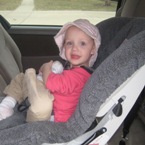
In the April 2011 issue of Pediatrics, the American Academy of Pediatrics (AAP) advised parents to keep their children in rear-facing car seats until age 2 or until the child reaches maximum height and weight limit for the seat. The National Highway Traffic Safety Administration (NHTSA) released new child seat safety guidelines shortly after AAP's publication was released.
Both AAP and NHTSA suggested parents check the maximum height and weight limit on their child's seat before moving them up to the next type of seat. They also suggested older children should ride in a booster seat until they reach 4 feet 9 inches and are between the ages of 8 and 12 years old. At this time, a regular seat belt should fit them properly.
“A rear-facing child safety seat does a better job of supporting the head, neck and spine of infants and toddlers in a crash, because it distributes the force of the collision over the entire body,” Dr. Dennis Durbin, MD, FAAP said. “For larger children, a forward-facing seat with a harness is safer than a booster, and a belt-positioning booster seat provides better protection than a seat belt alone until the seat belt fits correctly.” Previous policy cited age 12 months and 20 pounds as the minimum for transitioning a child out of a rear-facing car seat.
NHTSA Administrator David Strickland pointed out that while all car seats sold in the U.S. must meet federal child restraint safety standards, he said, "Selecting the right seat for your child can be a challenge for many parents. NHTSA's new revised guidelines will help consumers pick the appropriate seat for their child."
As always, children should ride in the backseat of a vehicle until they are 13 years old. Learn more at AAP's Health Children site.
Tuesday, March 15, 2011
More on the database, four days after launch

Have you gone to check out SaferProducts.gov? That's the new CPSCsite dedicated to the publicly available consumer safety incident database.
Consumers and others can report problems with products, incidents and injuries related to consumer products. CPSC has always had an online form for reporting, but now, most reports will become part of the public database.
Remember that this is a site to report safety issues, not product reliability or quality, except as they affect safety. So if the infant seat doesn't swing like it shows on the package, that is a quality issue, perhaps to be reported to customer service or an online product rating site. But if the motor that is supposed run the swing gets so hot it melts its casing and starts a fire, that is a safety issue and should be reported here, to CPSC.
Gather and input as much information about the product as possible – including identifying information such as model name or number, date of manufacture, etc. The more complete the report, the more likely it is to be posted and to provide CPSC with the information they need to assess the risk and take action if needed. CPSC has helpful pop-ups on the form that will help you find the needed information.
You need to provide your name and contact information for your incident to go into the database, but that information will not be posted and will only be released to the manufacturer with your permission. Giving the manufacturer your contact information, either through the CPSC form or by reporting directly to the manufacturer will allow them to fully investigate your incident and determine if action is needed. If you choose to file a report anonymously, CPSC will still get the incident information, but it will not go into the public database.
Manufacturers have 10 days after they are notified of a report by CPSC to review it for material inaccuracy. The best way to have the full 10 days is to register now with CPSC. The report will then be sent automatically.
Then, the report, if it has all the necessary information will be posted online. Right now, you can see the format here which CPSC has populated now with recall notices. Once the database has injury and incident reports, those will show up here too.
If you have problems reporting incidents or finding the data you need, let CPSC know. They already have great tools on the site to help both consumers and businesses navigate the system. We’d also love to hear of your experiences with the new database in the comments below.
Friday, March 11, 2011
Important Consumer Tool Launched Today

WASHINGTON, D.C. -- A coalition of consumer and safety groups today applauded the launch of the U.S. Consumer Product Safety Commission’s consumer product safety information database that would allow people to share and access safety information about the products they own and consider buying.
The groups -- Consumer Federation of America, Consumers Union, Kids In Danger, Public Citizen, Union of Concerned Scientists, and the U.S. Public Interest Research Group -- hailed the launch as a major step forward in educating consumers about product safety hazards and improving the CPSC’s ability to identify and act on problems in the marketplace. The database is up and running today online at www.SaferProducts.gov.
The database is required under the Consumer Product Safety Improvement Act (CPSIA) approved by Congress and signed by President Bush in 2008. As the debate over the federal budget continues in Congress, some lawmakers have pushed to defund the database. Manufacturers have also been pushing to undermine the database.
The CPSC has historically collected consumer complaints, but because the agency has been required to obtain the approval of companies before it could communicate with the public about a specific product, the information has been kept from the public for months or even years. The consumer complaint database will help shed light on the safety of products currently in the marketplace.
The CPSC database contains an array of protections to ensure that inaccurate information does not get published. Anonymous complaints will not be permitted, and only safety-related information will be posted. Complaints will not be considered for publication if 8 specific minimum fields are not completed. Businesses also get to see every report of harm before it is placed in the database, and have the opportunity to correct inaccurate information and to provide their own comments. These measures provide an appropriate balance between transparency for consumers and providing protections for manufacturers.
Rachel Weintraub, Director of Product Safety and Senior Counsel at Consumer Federation of America, stated, “Consumers will no longer be left in the dark about product safety -- they will now have access to lifesaving information. The CPSC will also be able to more nimbly identify and act upon safety hazards. The database carefully balances the need to bring safety complaints to light, while also allowing manufacturers to review submissions and provide comments.”
Ami Gadhia, policy counsel for Consumers Union, the nonprofit publisher of Consumer Reports, said, “This is safety news consumers can use. Once the database is up and running, we think fears raised about the database will be shown to be unnecessary. This database will be a useful tool for consumers.”
Nancy Cowles, executive director of Kids In Danger, a nonprofit dedicated to protecting children from unsafe products, added, “This crucial tool will help parents keep their families safe. The database will fling open the windows at CPSC and allow consumers to learn of dangerous products before it is too late. The decades of hiding injuries and deaths for months or even years will end. Parents trust a lot of products with their children’s lives. The database puts information in the hands of those who need it most.”
Christine Hines, Public Citizen’s consumer and civil justice counsel, agreed. “Today begins a new era in consumer product safety - one that will empower consumers to help themselves to identify hazardous products. That’s why it’s imperative that Congress follows up its commendable action in creating the database by ensuring it continues to thrive with appropriate funding.”
Liz Hitchcock, U.S. PIRG Public Health Advocate, said, “The information exchange that SaferProducts.gov will provide for consumers is going to prevent injuries and save lives.”
Diana Zuckerman, Ph.D., President of the National Research Center for Women & Families/ Cancer Prevention and Treatment Fund stated, “The product safety database will give everyone the information they need to help protect themselves and their families. It’s a simple but effective strategy that will save lives and improve the quality of our lives.”
Celia Wexler, Washington Representative, Scientific Integrity Program, Union of Concerned Scientists, said, "The new database strengthens the transparency of CPSC and will enable scientists and researchers, both inside and outside the agency, to spot trends early and pro-actively. The ability to respond to problems before product defects harm scores of consumers benefits both the public and businesses.”
***
Thursday, March 10, 2011
Tomorrow is the day

It feels a little like the eve of the first day of school – some of us are very excited and can’t wait; others, not so much.
Tomorrow, CPSC will launch their new publically-accessible consumer database at saferproducts.gov. Now, just as is already the case with cars, medicine and medical devices, consumers will have a place to report incidents with products as well as look for safety information that other consumers might have entered. Manufacturers seem to be dreading the change in the current situation – where they have all the power to determine what safety information consumers know about their products.
We'll have more tomorrow on using the database.
For today, here are some statements from parents who have already lost children to unsafe products – they know the importance of this new database.
The CPSC database gives parents, grandparents, families, friends, medical personnel, and even retailers, IMMEDIATE and FREE access to information regarding problems reported on a particular product, not just those few which rise to the surface because a child has either died or been seriously injured by the product. By that time, it is dangerously too late. It could take months, as it did in Ellie’s case, before the public has knowledge of this essential information.
Lisa, mother of Ellie who was killed in a Graco play yard with a changing table accessory in 2002.
I firmly believe that if such a database was in effect in the 1990s my son, Tyler, would be alive today. Tyler died when a dangerous drop side crib strangled him. Tyler was not the first (and sadly, not the last) to die due to the inherently flawed crib design. If I, as a consumer, knew about the other babies who died in drop side cribs I would never have purchased that deathtrap. A public database would have empowered me to make a more informed decision about a product intended to be my Tyler’s safe haven.
Michelle, mother of Tyler, who died in 1998, entrapped by a drop-side crib.
If I had known there had been children killed in drop-sides, it would have swayed me against them.
KID believes this database is an important tool for consumers – both to report information they believe will keep other consumers safe and to research products they own or are considering purchasing. It will give CPSC and others tools to identify emerging hazards and injury trends. Contrary to the fears of some – KID won’t be entering data – we’ll be too busy making sure parents are aware of this great safety resource.
Monday, March 7, 2011
KID releases Moving Toward Safety, a review of 2010 recalls and CPSC actions

Today, KID, along with Illinois Attorney General Lisa Madigan, Congresswoman Jan Schakowsky and Illinois PIRG state director Brian Imus, released Moving Towards Safety, a review of 2010 recalls and CPSC actions.
Just about every two days there was a recall of a children’s product in 2010. These 160 recalls account for over 44 million individual toys, cribs, sweatshirts, strollers and more. That’s an increase of twelve percent from 2009 in recalls and 110% in units recalled.
At first glance these facts seem to indicate that the state of children’s product safety had worsened in the last year. However, though the number of recalls and the number of children hurt and killed by unsafe products is cause for concern, there were marked improvements to product safety oversight in 2010 as a result of the Consumer Product Safety Improvement Act (CPSIA) and other CPSC actions. We believe that many of these actions will not only reduce recalls in the future, but make it more likely recalled products will be retrieved from use.
The increase in recalls from 2009 can be partially attributed to the numerous recalls to remove from use failure-prone drop-side cribs which have been linked to dozens of deaths, as well as children’s sweatshirts and outerwear that continue to be produced with dangerous drawstrings.
The recalls show that we still have a long way to go before children are fully protected from unsafe products, but at the same time CPSC has taken actions that have had a measurable and positive impact on safety. We can take heart that we are moving in the right direction.
Read more.
Tuesday, March 1, 2011
Days away from launch, public safety database still faces threats.

The database CPSC has been working on for two and a half years is days away from launch. It will go live on Friday, March 11. CPSC has carefully crafted the site to both solicit important safety information from consumers and encourage accurate reporting. The database will provide consumers with a place to report injury and safety information and provide consumers, researchers and the CPSC with important information on injury trends and emerging hazards.
The CPSC did a soft launch of the database last month. That just means it was live, but the information wasn't made public. The results? 900 reports -- only four were 'materially inaccurate.' And two of those had the wrong manufacturer listed and were easily corrected. One manufacturer/importer at ICPHSO last week said that of the 50 reports they got, 90% agreed to give the manufacturer their contact information, providing a way to verify the information. Some manufacturers told us they didn't receive any reports during the month, others that they had a few and all were reasonable reports of a consumer's experience. So perhaps the sky won't fall next week after all.
But that doesn't stop the attacks. After all, for years manufacturers have been able to hide virtually all injury reports from the public. The status quo means consumers continue to use products that have been involved in numerous injuries or even deaths. The sunshine the database brings means more educated consumers and ultimately, safer products.
The House adopted an amendment to the Continuing Resolution they sent to the Senate that defunds the database -- a move that wastes the money already spent rather than saving money and is designed to stop injury data from coming to light.
If you haven't already contacted your US Senators, please do so and urge them to oppose any "Keep American Families in the Dark" efforts to stop the database.
Update on ICPHSO

So the week spent with other product safety folks at the International Consumer Product Health and Safety (ICPHSO) Symposium was full of information and opportunities to collaborate on new approaches to safety. The first day and 1/2 of the meeting focused on injury prevention. Representatives from the Injury Free Coalition for Kids, including our 2007 KID's Best Friend, Dr. Elizabeth Powell, presented information on their research and education efforts. Then, through a series of workshops, representatives from industry, retailers and consumer groups brainstormed with them on injury prevention ideas we could all implement.
Dr. Powell was joined by two other KID's Best Friend honorees -- Dr. Gary Smith (2010) who spoke on his research on smoke alarms and children and Rachel Weintraub (2004) of Consumer Federation of America who organized and moderated the injury prevention segments.
KID's executive director, Nancy Cowles spoke on a panel on recalls. She stressed the need for better recall effectiveness and the rights of consumers to have information on product hazards. In addition, Cowles participated in an injury prevention workshop on toy and home safety.
Much of the conference was dedicated to new changes from CPSC including the database and testing requirements.
We also saw new tools such as the HD XRF machine which can detect heavy metals with more precision than regular XRF guns.
CPSC Chair Inez Tenenbaum spoke and on the final day, CPSC Commissioner and business school professor, gave a talk on negotiating with the CPSC.
More info and membership information can be found at ICPHSO.org.
Subscribe to:
Posts (Atom)
Subscribe To


 Posts
All Comments


