Linda Ginzel appeared this morning on the CBS news show, The Early Show. She talked about her family's experience when her son Danny was killed in a dangerous portable crib at his licensed child care home in 1998. The segment discusses "Danny's Law" which requires product registration cards with nursery products and efforts to get recalled products out of homes and off store shelves.
Showing posts with label recalls. Show all posts
Showing posts with label recalls. Show all posts
Tuesday, August 31, 2010


Monday, August 30, 2010
ABC Chicago "For Your Family" talks about product registration and recalls with KID
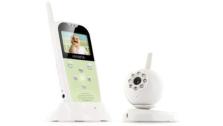
KID's executive director was up early this morning for a segment on ABC Chicago's early news. Judy Hsu, host of "For Your Family" talked with KID about the new product registration program for juvenile products and highlighted several recent recalls. You can see the video here.
A brochure on product registration and a list of manufacturer online registration sites put together by KID and Consumer Federation of America are available online.
Sign up to get notice of each recall at CPSC or a monthly email alert and recall list here from KID.
Friday, July 16, 2010
Child product safety news

CPSC votes unanimously on new tough crib standards.
CPSC issues recall and discusses dangers of crib and play yard tents.
CNN reports on one mother's fight for safe cribs.
Pottery Barn recalls all their dropside cribs.
Have questions about drop-side cribs? Check out KID's blog post.
Or this podcast with KID on CNN Radio.
Monday, May 10, 2010
Company compiles poster of baby product recalls
Check out the recent poster on recalls by Hugamonkey. A great visual..

Tuesday, April 27, 2010
What’s the Deal with Drop-side Cribs?
 What is a drop-side crib?
A drop-side crib is a crib in which the side rail moves up and down on tracks to allow easier access to the child. The tracks can be in the end posts or attached to the end post with plastic or metal hardware. A drop-gate crib, where the top several inches of the crib side fold out and down is not a drop-side and not subject to the same problems.
What are the problems?
Drop-side cribs have been involved in dozens of 
As a result, and as the Consumer Product Safety Commission (CPSC) learns of the deaths, millions of drop-side cribs have been recalled. These include Storkcraft (also under the Fisher Price name), Delta, Simplicity (also under the Graco name), Lajobi (under the Bonavita or Babi Italia names), Generation 2, ChilDESIGNS, Dorel Asia and Caramia. But millions more drop-side cribs, some of which have had incidents, are still in the marketplace. Both recalled and non-recalled drop-side cribs are still in wide use in homes and child care facilities.
What is being done about this danger?
In part due to the frightening aspect of millions of unsafe cribs after the first of many Simplicity recalls in 2007, Congress enacted the Consumer Product Safety Improvement Act in 2008. This law, among many vital safety measures, requires that CPSC develop and implement a strong mandatory standard for cribs and other durable infant and toddler products and require third party testing to certify compliance to those standards. Already the voluntary ASTM standard has been changed to require the bottom part of all sides to be firmly fixed to the end posts – a design that disallows drop-sides -- and it is expected that the mandatory standard will also include that ban. Major retailers, including Babies”R”Us, have already stopped selling the design.
What should I do…
…If I’m about to buy a crib?
If you are getting ready to buy a crib, do not buy a drop-side crib. Cribs that are lower to the ground or have a drop-gate can help parents who feel it would be difficult to reach into a fixed side crib. When purchasing any crib, check that it meets the most current safety standards and feels sturdy in the store. Buy a mattress that fits snugly in the crib and tight fitting sheets. If considering a used or hand-me down crib, do not use a drop-side crib and only take a used crib when you know its history, have all the parts and instructions and know it can be assembled correctly. It is better, especially now when new standards are so much stronger than the standards of just a year or two ago, to buy a new crib.
…Already have a drop-side in use
First, check the list at CPSC.gov and make sure your crib hasn’t been recalled – millions have. Check the list carefully – many cribs might be known by a name other than their brand name, or made by one company and sold under another company’s name. If it doubt, get the model name and number and manufacturer name and call CPSC to confirm. If it has been recalled, follow the recall instructions to get a repair kit, replace the crib or receive a refund.
If your crib is not recalled, check all the hardware and plastic parts to make sure it is all tight and there are no broken, cracked or missing pieces. The crib should feel sturdy when you shake it and you should not be able to lower the drop-side by any means other than the manufacturer’s instructed method. If your crib shows any breakage or you can move the drop-side without following the correct method, STOP using the crib. Call the company to see if replacement parts are available and do not use the crib until new parts are correctly installed. If the crib doesn’t have replacement parts, stop using it and call both the company and CPSC to report the breakage. Never attempt to fix the crib yourself without the correct hardware and instructions from the manufacturer.
If your crib has no broken, cracked or missing parts and feels sturdy, continue to use it until the child can transition to a bed, but stop using the drop-side mechanism and check frequently – at least once a week -- for loose, broken, cracked or missing hardware or parts. However, do not use the crib for a subsequent child or hand it down since assembly and disassembly of a drop-side crib can increase the risk of failure. It may be worth the peace of mind to purchase a new crib.
My crib is recalled or unsafe – what do I do with my child?
This is the hardest thing about recalled or unsafe cribs. While with toys or other products we can recommend taking it away and waiting for the replacement; with cribs, you need a safe place for your baby to sleep – tonight! So, what are your options? First, if your baby is still young enough that he or she can’t roll over or push up on hands and knees, you can use a bassinet you might have been using earlier. Another option is a portable crib or play yard that you use while traveling – first making sure it hasn’t been recalled. Never put a baby to sleep on a couch, chair, adult bed or other surface that might be too soft or have cushions or other features that can smother or entrap a baby. If your baby is older, perhaps almost ready to transition to a youth bed or regular bed, you might try a mattress on the floor to avoid falls. The only option might be to purchase a new crib or portable crib. If a new safe crib is a financial hardship, consider contacting Keeping Babies Safe or First Candle to see if you qualify for their crib programs.Learn more at www.KidsInDanger.org
Wednesday, March 3, 2010
CPSC issues "consent decree" and $2 million civil penalty to Daiso Holdings

"When you look at where we have been and where we are headed", said CPSC Chairman Inez Tenenbaum, only two weeks ago, "you can see why we are agency on the rise." It seems that these words are beginning to translate into actions.
With the strengthening it received from the 2008 Consumer Product Safety Improvement Act, the U.S. Consumer Product Safety Commission (CPSC) has begun to assert itself. On March 1 the CPSC took resolute measures against Daiso Holding USA Inc., a toy importer and repeated violator of federal safety standards. Besides a $2.05 million civil penalty, CPSC has issued an unprecedented "consent degree", preventing Daiso from importing or selling any of its products until it implements a comprehensive product safety program and all its toys meet federal standards. Daiso has voluntarily withdrawn its products from all retail outlets until the above conditions are met.
"This landmark agreement for an injunction sets a precedent for any firm attempting to distribute hazardous products to our nation's children", said Chairman Tenenbaum. "We are committed to the safety of children's products and we will use the full force of our enforcement powers to prevent the sale of harmful products."
KID welcomes this assertiveness and hopes this is only the beginning of a trend towards more accountability. "This is really a powerful first step, ensuring that no products are sold until they're safe", said Nancy Cowles, executive director of KID, "CPSC is putting manufacturers on notice that they must put safety first."
For more information on children's product safety, you can visit kidsindanger.org or cpsc.gov.
Tuesday, January 19, 2010
Breaking News: Dorel Asia Recalls Cribs: Strangulation and Suffocation Hazards

Today the U.S. Consumer Product Safety Commission, along with Dorel Asia is announcing a voluntary recall to replace drop side and non-drop side cribs that pose suffocation and strangulation hazards to infants and toddlers. Consumers should immediately stop using the recalled cribs until replacement kits are obtained and installed from Dorel Asia.
CPSC and Dorel Asia received a report of the death of 6-month old child who became entrapped and strangled in a crib after the drop side hardware broke. Reports of 31 drop side incidents were received and in six of those incidents, children were entrapped between the drop side and crib mattress. In addition, CPSC and Dorel Asia received reports of 36 incidents of slat breakage, including reports of bruises and scratches to children.
What makes these cribs so dangerous? The drop side hardware can fail causing the drop side to detach from the crib. When the drop side detaches it creates a space in which an infant or toddler can become entrapped and suffocate or strangle. In addition, the recalled cribs can pose a serious entrapment and strangulation hazard when a slat is damaged. This can occur while the crib is in use, in storage, being put together, taken apart or reassembled; or during shipping and handling.
Dorel took the unusual and distasteful step of immediately reversing what was said in the joint press release with CPSC in their own release a couple hours later. Given the amount of time wasted in negotiating the wording of releases with companies before a recall is released, this kind of public backtracking should be discouraged, perhaps with fines.
Consumers should immediately stop using the recalled cribs, find an alternative, safe sleeping environment for their child, and contact Dorel Asia to receive a free replacement kit. Consumers should log on to www.dorel-asia.com to order the free replacement kit. The repair kits will be provided to owners within the next several weeks.
Exact model numbers and styles of cribs involved in this recall can be found through the CPSC website.
Finally, CPSC reminds parents not to use any crib with missing, broken, or loose parts. Make sure to tighten hardware from time to time to keep the crib sturdy. When using a drop-side crib, parents should check to make sure the drop side or any other moving part operates smoothly. Always check all sides and corners of the crib for disengagement. Disengagements can create a gap and entrap a child. In addition, do not try to repair any side of the crib, especially with duct tape, wire, or rope.
Thursday, December 31, 2009
Danny would be 13 today

Today is the birthday of my nephew, Leo. His mother, my cousin Amy, died in 2007 after a short but intense fight with cancer. I see Leo turning 13 and know how proud his mom would be of what an amazing young man he has become -- and how profoundly sad it is that she isn't here to see it.
But Leo also reminds me of another boy who would be turning thirteen today. Leo shares the birthday of Danny Keysar, whose parents founded KID in 1998 after he was killed in a dangerous portable crib. As I watch Leo grow, I see the shadow of what Danny might be doing and what an amazing young man he would become -- and again, how profoundly sad that he isn't here.

Danny didn't die of a disease with no cure, but of a flawed children's product safety system that allowed a dangerous crib to be sold and then remain in use even after other babies had died.
All of KID's work is to honor the memory of Danny and other victims of unsafe children's products. He is always in our thoughts as are Ellie and Andy, Ethan and Riley, Liam and Kennedy, and too many others. We are proud of the legacy we are building in their memory that will keep other babies safe.
We have seen tremendous change over the past several years in the area of children's product safety. With new laws, some carrying Danny's name, and a new active administration at CPSC, children are already safer today -- but more must be done. Join with us to honor not only Danny, but the children in your life with a safer tomorrow.
- Make a donation to KID in a child's name. We promise to put it to good use fulfilling our mission to promote safer products, advocate for children and educate the public about dangerous children's products.
- Check the children's products in your home for recalls and urge others -- grandparents, caregivers, neighbors and family -- to do the same. There were seven million cribs recalled in the last two years..Make sure your child isn't sleeping in one of them. Sign up for email alerts from CPSC and KID.
- Tell your elected officials, local, state and federal -- that children's safety should be a priority
- Read the stories in our Family Voices site. Many of these families paid the ultimate price of unsafe products.
- If you have a product that appears to be unsafe, report it to the Consumer Product Safety Commission. This is sometimes the only way unsafe products are removed from the marketplace.
Nancy Cowles, executive director
Wednesday, December 30, 2009
2009 Parent Survey Provides Insight for Recall Awareness
Kids In Danger released The Illinois Parent Survey on Product Safety today. The survey found that when asked to list issues, parents reported home safety concerns most often above crime, traffic and outside injuries concerns. Yet, parental awareness may not align with parental concern. On average, the Consumer Product Safety Commission (CPSC) recalls children's products over twice a week, but only 43% of parents hear of recalls even once a month.
Most parents still get their recall information from TV news, despite the increased use of the internet. Also, the survey found that consumers are more likely to comply with recalls when given a replacement or refund on their item.
KID will use the results of this survey, along with additional information, to inform our own outreach and education efforts as well as help advocate for more effective recalls.
Wednesday, December 23, 2009
Safety Updates and News on 12/23/09
Here is a brief roundup of some news coming across our desk this week:
A class action lawsuit on behalf of families whose children played with the CSI Fingerprinting Kit by Planet Toys has reached a tentative settlement. The suit alleged asbestos was found in the fingerprinting powder. If you had or have one of these toys, January 14, 2010 is your last chance to register for the settlement. For more information, visit the website.
The Insurance Institute for Highway Safety (IIHS) this week announced the results of their booster seat testing for fit -- how each seat positions the seatbelt on a child. They tested sixty seats and rates some as Best Bets, Good Bets and Not Recommended, along with those where the data was inconsistent. In addition to the information at IIHS, Consumer Reports, Car Seat Blog and SafeKids also have coverage and advice.
A ban on drop side cribs has been introduced in New York. And the ASTM International recently published the new voluntary standard on Full Size Cribs that also eliminates that design. Because Illinois' Childrens Product Safety Act requires cribs to comply with ASTM standards, cribs with drop sides may violate that law now in Illinois and can't be sold, new or used by commercial sellers.
And we found this on the Toy Industry Association site, Toy Info: a panel discussion with industry safety experts who also happen to be moms -- some good information on checking second hand products and age grading of toys.
And finally, CPSC is holding another 2 day workshop, this one on the development of the Public Database. The panel information and registration is now available at the CPSC site.
Wednesday, November 11, 2009
Maclaren Stroller Recall: Update

On Monday, the Consumer Product Safety Commission (CPSC) issued a recall of 1 million Maclaren strollers sold in the last decade. The recall includes all single and double umbrella strollers, which pose a risk of fingertip laceration and amputation for children. The CPSC has received 15 incident reports, including 12 instances of child fingertip amputations. The hazard results from children getting their fingers pinched in the hinge while parents open or close the stroller. News of the recall first appeared in the Baby Bargains Blog over the weekend.
Maclaren has responded by offering a free repair kit with hinge covers to all owners of these strollers. However, consumers have reported difficulty in accessing the repair kits. Maclaren's website and phone lines were overloaded on Monday, preventing some consumers from ordering the repair kits. Maclaren has also posted a YouTube video with directions on how to install the hinge covers.
Hinge hazards are common to all folding strollers and the CPSC is looking into the need for further recalls or regulations for stroller hinges. Parents should stop using any Maclaren stroller included in the recall until the hinge covers are installed. As with any recall, CPSC is still interested in reports of injuries or incidents with the product.
Update: On Thursday The New York Post reported that Maclaren knew about the risk of finger amputation in their umbrella strollers at least five years ago and failed to report the hazard to the CPSC. In July 2004 a 23-month-old lost his pinky finger, resulting in a settlement between his family and Maclaren. In 2007, an engineer and former compliance officer with the CPSC testified that Maclaren folding strollers have a design defect in comparison to other strollers for children and that the design violates federal regulations intended to prevent a "scissoring effect." The CPSC is still investigating the case.
Update: Maclaren has responded to many of the concerns about the online form and repair kit process and made it easier to get the needed hinge covers.
Tuesday, October 6, 2009
National Fire Prevention Week -- check for products with burn or fire hazards

It being National Fire Prevention Week, we'd like to reemphasize the threat fire or burns can pose to your children and to offer some advice on protecting them.
Many safety groups have great tips for avoiding fire and burn injuries. Here are just a few..
- Never leave the stove or oven unattended in a child's presence.
- Keep space heaters at least 3 ft away from all curtains, papers or clothing.
- Make sure there are smoke detectors in all bedrooms and throughout the home (test them monthly).
These dangerous products could still be in your home, even if they'd been formally recalled years ago. To be safe, take an inventory of all children's products in your home and visit the Consumer Product Safety Commission (CPSC) website to check their recall status or call their hotline at (800) 638-2772.
Thursday, October 1, 2009
Consumer Reports offers new safety alert website

On September 28th Consumer Reports (CR) released a new website specifically geared towards child safety. To promote their new resource CR has teamed up with the National Parent Teacher Association (PTA) and National School Board Association (NSBA). The PTA and NSBA have promised to inform their members about the new alert system, which could potentially help millions of parents receive timely information about child product recalls.
The site aggregates all child-relevant recall notices from the Consumer Product Safety Commission (CPSC), Food and Drug Administration (FDA) and the National Highway Traffic Safety Administration (NHTSA). Apart from the alerts, CR provides a whole host of useful, category-specific safety videos, such as this one on safety gates.
For more information, you may also want to visit www.recalls.gov, which lists all federal recalls and provides a portal to the CPSC, FDA and NHTSA.
Monday, September 28, 2009
Changes to Illinois law improve posting requirement
 In Illinois, a new law changes the recall posting requirements for children's products. Public Act 096-0590 amends the preexisting Children's Product Safety Act by increasing the required 120-day posting of recalled children's products to 240-day postings for the following items: full-size cribs, non-full-size cribs, toddler beds, car seats, high chairs, bath seats, play yards, stationary activity centers, infant carriers, strollers, walkers, swings, bassinets and cradles. Signed by Governor Pat Quinn on August 18, 2009 and sponsored by Rep. Anthony DeLuca (D-Chicago Heights), this law became effective immediately.
Another important change to the Children's Product Safety Act under PA 096-0590 is a retailer's ability to now post recalled items electronically. Previously, retailers were mandated to post paper recall notices within the store property. Parents and caregivers be aware-- if you don't see posters of recalls in your consumer location, check a kiosk or computer terminal in the store for electronic postings. Stores are still responsible to post a physical sign to alert consumers to the electronic postings' location. Look for links such as "product recall" if there is not a warning notice on the main page.
As the Product Safety Letter recently stated, "Illinois has been a bellwether state on recall effectiveness." The state passed the first Children's Product Safety Act in the nation in 1999, banning the sale or commercial use of recalled children's products. The original Act was amended in 2005 to require the posting and consumer notification requirements. Illinois Attorney General Lisa Madigan takes seriously her obligation to enforce the act as well as other measures to protect children from unsafe products.
Friday, September 11, 2009
Celebrate national Grandparents Day on Sept 13
 Make safety a part of your Grandparents Day celebrations! Grandparents and older relatives serve as teachers, caregivers, and pillars of the family. They are a rich source of wisdom and heritage. It is crucial that these important family members have up-to-date information on child product safety.
This year's Grandparents Day marks the launch of The Debby Sayah Grandparent Outreach Project, an educational campaign to give grandparents the tools and information to keep grandchildren safe from dangerous, recalled products. The program is named for Debby Sayah, mother of KID board member Judy Sage. Her grandson, Andy, suffocated on a foam sleep positioner in 2002.
Check out the safety suggestions in our Grandparents Day email and forward it to others. More materials and opportunities will become available in the near future. Contact Sarah with comments, ideas, and feedback on the program, or if you would like to receive updates on new activities and resources.
Monday, August 31, 2009
Reminder: Check bassinets for deadly recalls

Last year, CPSC recalled 900,000 Simplicity Bassinets sold under the Simplicity, Graco and Disney names after they had reports of two deaths. As we reported earlier this month, they have now learned of at least two additional deaths.
To help spread the word about these recalls, the Illinois Attorney General's office has developed posters in English, Spanish and Polish. Please download and print these lifesaving posters and place them where parents might see them: child care facilities, doctor's offices, neighborhood businesses, etc.
Tuesday, August 25, 2009
Take your old nursery products to Toys"R"Us for a 20% coupon

Toys"R"Us, Inc. has announced a national program allowing customers to trade-in used baby products in exchange for savings on a new item. During the company's "Great Trade-In" event, running August 28 through September 20, all Babies"R"Us and Toys"R"Us locations will accept used cribs, car seats, bassinets, strollers, travel systems, play yards, and high chairs in exchange for a 20% savings on the purchase of any new baby item from select manufacturers. The event is intended to raise awareness about the potential safety hazards associated with used baby products and to provide an opportunity to take such items out of circulation.
KID warns that less than 30% of affected items are returned when a product is recalled, and nursery product recalls have been on the rise all year. Beyond recalls, older and used products entail special problems from wear and tear and noncompliance with current safety standards. For more information, see KID's fliers on second-hand products, safe donations, and yard sale safety. Product resellers should read CPSC’s handbook for details on safe, lawful resale.
This move by Toys"R"Us is one way to help reduce the number of unsafe products in use. The New York State Consumer Protection Board also supports the effort.
Tuesday, June 9, 2009
LaJobi recalls 4,900 Bonavita and Babi Italia cribs in two recalls
 LaJobi and CPSC announced two recalls today for 4,900 cribs.
First, 2,000 Bonavita "Cabana" cribs were recalled for slat failure -- the slats can come loose and/or break. LaJobi had ten reports of slats coming out of the rails and six reports of slats breaking.
Also, 2,900 Babi Italia "Pinehurst" cribs and Bonavita "Hudson" cribs were recalled for drop side failures. The spring pins in the dropside mechanisms can come out, causing the side to detach and presenting an entrapment hazard. LaJobi had 33 reports of the pin failing, including two entrapments and one child falling out of the crib.
For the Cabana crib with the slat failures, consumers should stop using the crib immediately and contact LaJobi for replacement side rails.
For the Hudson and Pinehurst cribs, consumers should stop using the crib immediately and contact LaJobi. The company will arrange for professional technicians to provide an in-home retrofit.
KID is very interested in hearing from consumers about their experience with these recall remedies. Post in the comments below with your experience or send an email.
Tuesday, April 21, 2009
KID releases new report on 08 recalls, recall effectiveness
Today, Kids In Danger released Toxic Toys and Faulty Cribs, an examination of children's product recalls in 2008, recall effectiveness at CPSC and the implications for child safety. KID was joined by US Congresswoman Jan Schakowsky, Illinois Attorney General Lisa Madigan, and representatives of Illinois PIRG and Lead Safe Illinois. here is the release:
2007 might have been the Year of the Recall, leading to landmark children’s product safety legislation in Congress, but the recalls continued through 2008, including a record number of crib recalls.
The report found that children’s product recalls by the U.S. Consumer Product Safety Commission (CPSC) remained high in 2008, following 2007’s record numbers. There were 190 recalls accounting for more than 18 million items, including twelve recalls of cribs responsible for five deaths.
“These products together caused at least 210 injuries and 7 deaths,” stated Nancy Cowles, executive director of Kids In Danger. “And those incidents include only those already reported at the time of the recall. More needs to be done to protect children from these hazards.
Additional findings of the report include:
· Toys were the largest category of recalled children’s products – 41%
· Despite the scrutiny on lead in 2007, 36% of the recalls were for lead paint hazards.
· There were five recalls of over one million products with over 18 million units recalled in total.
· Two-thirds of the recalled products were made in China, 4% were made here in the United States.
· Evenflo had the most injuries prior to a recall – 94 in their Majestic High Chair.
· A record number, 12, cribs were recalled, involving eight injuries and five deaths.
· While CPSC requires monthly updates on Corrective Action Plans, research showed that many companies simply don’t file the report or don’t fill in the requested information. For those that do, the numbers show that most recalled products remain in the hands of consumers.
KID recommends that CPSC immediately begin to plan and implement a public database with product and injury data. In addition, CPSC should require more of companies when a product is recalled to ensure dangerous products are removed from use or repaired. “Congress should request annual reports on recall effectiveness,” stated Cowles. “Perhaps the light of day will encourage companies to take those extra steps to get their defective products out of homes and child care facilities.”
“We are obligated to protect our children from the dangers of the world when the solutions are as obvious as they are with toxic toys,” said Rep. Jan Schakowsky. “By increasing oversight and enforcing accountability on manufacturers we will provide parents with greater peace of mind and children with toys they can enjoy.”
“I have launched many investigations to identify and remove dangerous products from store shelves in
KID recommends that parents check the products used with their children at www.cpsc.gov and sign up for safety updates at www.KidsinDanger.org. In addition, parents should report problems with a product both to the manufacturer and CPSC and urge Congress to continue its oversight of the agency.
“Parents should not have to be scientists in the toy store in order to make sure they are buying safe products for their children,” said Emily Miller, Health Care Advocate with Illinois PIRG. “Toys should be safe, period. Kids, who are our littlest consumers, deserve high safety standards that protect them from death and other serious health hazards.”
“Lead in toys is one of the causes of children being harmed by lead,” concluded Anita Weinberg of Lead Safe Illinois. “At the same time, lead poisoning is one of the few causes of social and learning problems we know how to solve - it's preventable. Kids in Danger's report on "Toxic Toys and Faulty Cribs" goes a long way to helping raise awareness about preventable risks to children.”
More information about Kids In Danger and dangerous juvenile products is available at (312) 595-0649 or www.KidsInDanger.org.
Subscribe to:
Posts (Atom)
Subscribe To


 Posts
All Comments


